
Worn shock absorbers: the signs, potholes and why you replace them in pairs
Updated October 30, 2026 · AutoPartes.cr

Your shock absorbers are probably worn if the car keeps bouncing after a pothole or speed bump, leans hard in corners, dives at the nose when you brake, shows oil on the shock body, or wears its tires in patches. A mechanic can confirm it with a quick inspection.
Between potholes, speed bumps, gravel roads and steep hills, shock absorbers work hard in Costa Rica. The catch is that they wear out slowly, so you get used to the car bouncing or banging a little more each month. Here's how to recognize the signs, what to check, and what to ask for when it's time to replace them.
What do shock absorbers actually do?
They keep the tires pressed to the road and stop the springs from bouncing. Without them, the car would keep rising and falling after every pothole, and the tires would lose grip exactly when you need it most.
The springs (or leaf springs on many pickups) carry the car's weight. The shock controls how fast that spring moves. So a worn shock doesn't make the car sit lower, but it does make it feel loose and unsettled, with less control when braking or cornering.
What are the signs of a worn shock absorber?
The clearest sign is a car that keeps bouncing after a pothole or speed bump. These are the most common:
- Too much bounce: after a speed bump, the car rises and falls two or three times instead of settling at once.
- Hard knocks over potholes, as if the suspension were hitting its stops.
- Heavy body lean in corners, or a "floating" feeling on the highway.
- Nose dive under braking, with the rear lifting.
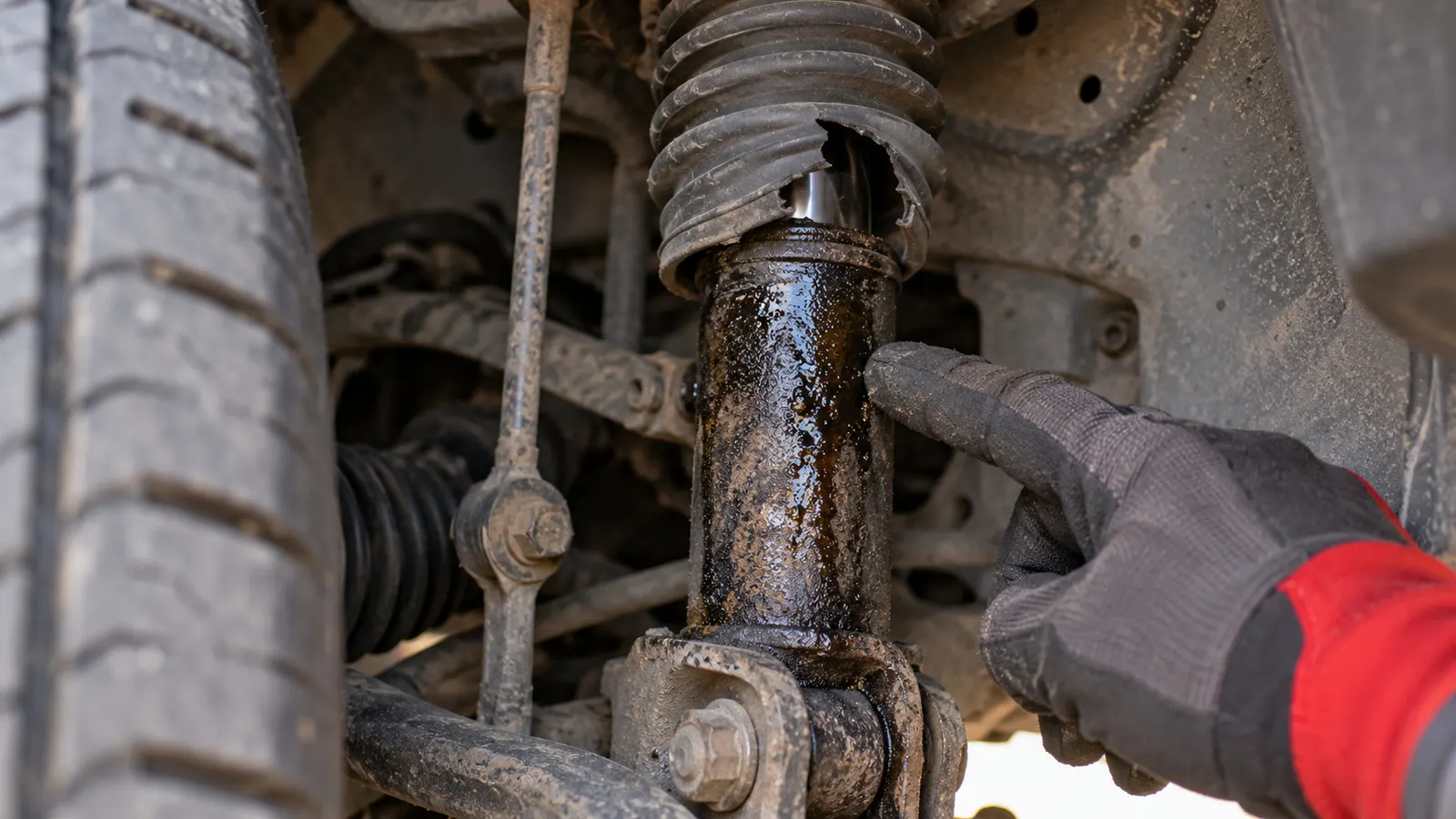
- Oil on the shock: the body looks wet, or dirt is stuck to a greasy film.
- Patchy tire wear, with smoother spots spread around the tread.
- The car gets pushed around by wind or a passing truck.
None of these alone proves the shocks are gone: some noises come from bushings, ball joints or sway bar links. A mechanic checks the whole suspension and tells you which part is failing.
How can I check them myself?
There are two simple checks you can do before going to the shop, but they don't replace a mechanic's inspection.
- The bounce test: with the car parked, push down hard on one corner and let go. If it comes up and stops, that's fine. If it bounces several times, that shock may be worn.
- Take a look: in good light, check behind each wheel. Look for oil running down, dents in the body, a torn rubber dust boot or a crumbled bump stop.
If you spot any of these, ask for a check at your next service or wheel alignment.
Why are shocks replaced in pairs?
Because the two shocks on the same axle need to work the same way. If you replace only one, one side of the car ends up firmer than the other, and you'll feel it when braking and cornering.
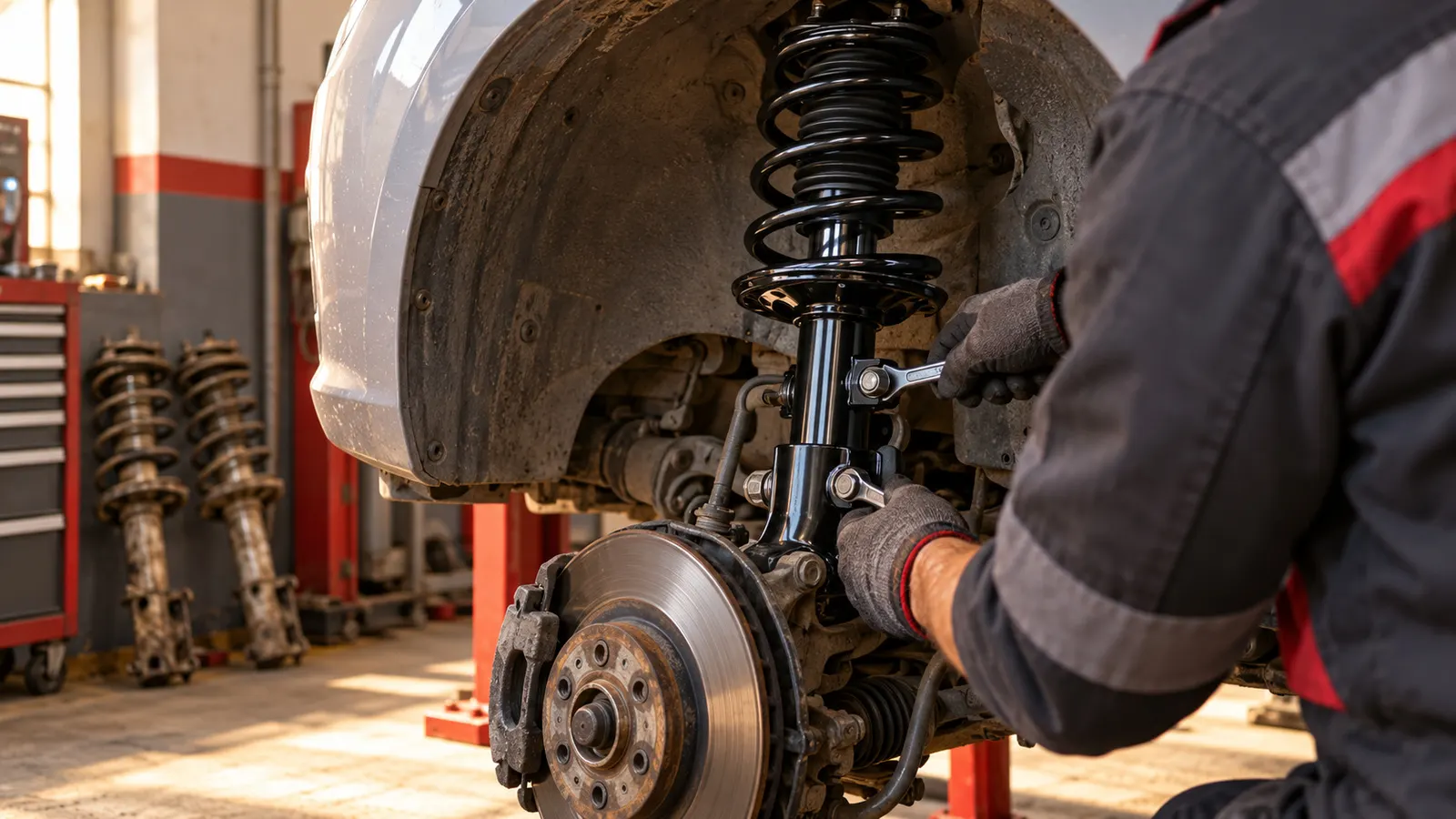
The usual approach is to replace both fronts or both rears together. You don't always need all four: the fronts often wear first, since they carry the engine's weight and most of the braking. Your mechanic will tell you if the rears are still fine.
What else is worth replacing at the same time?
When the shocks come off, it's worth checking the parts mounted with them, since they're already apart and you save on labor:
| Part | Why check it |
|---|---|
| Top mount | It cracks with age and causes knocks and noises when turning. |
| Strut bearing (on cars with struts) | If it's stiff, the steering creaks when you turn. |
| Dust boot and bump stop | They protect the new shock from dirt and hard hits. |
| Sway bar links | They often rattle over potholes and get mistaken for the shocks. |
On many small cars the front shock is a "strut", which is also sold fully assembled with the spring and top mount, ready to install. Ask us about both options when you request a quote.
How long do they last in Costa Rica?
It depends a lot on how and where you drive. On pothole-heavy streets, gravel roads or with a car that's always loaded, they wear faster than on smooth highway.
Rather than going only by mileage, ask for a check at every alignment or tire change. If you're replacing tires because they wore in patches, check the shocks before fitting the new ones, or the new tires will wear the same way.
What do I need to order them?
To quote the right shocks, we need:
- Make, model, year and trim of the car.
- The VIN or chassis number, which confirms the exact version.
- Front or rear, and whether you want just the shock or the complete strut assembly.
- A photo of the part or its label, if you have one.
On pickups like the Hilux, shocks change with the drive type and ride height; see our guide to Toyota Hilux parts. For suspension, a new part is the way to go, either original or from a reputable alternative brand; we explain the difference in new, used, OEM or aftermarket parts.
In short
Extra bounce, knocks over potholes, body lean, nose dive under braking or oil on the shock body all point to worn shocks. Have a mechanic confirm it, replace them in pairs and check the mounts and links at the same time. Once you know what you need, request your free quote and we'll send you the total price in colones, no commitment.
Frequently asked questions
Is it dangerous to drive on worn shocks?
It can be. Worn shocks make the car take longer to stop, lose grip over potholes and in corners, and handle worse on wet roads. Get them checked soon.
Can I replace just one shock absorber?
It's not recommended. Both shocks on an axle should work the same, so they're normally replaced in pairs, front or rear.
Is a noise over potholes always the shocks?
No. Often it's the sway bar links, bushings, ball joints or the shock's top mount. A mechanic inspects the suspension and tells you which part it is before you buy.
How long does a set of shocks take to arrive?
Usually 1 to 3 weeks. We send you a quote with the total price in colones, valid for 7 days, and you pay 50% to order and the rest on delivery.